
Environments

Thesis by Rian Phin
“What's your first environment? If you want, you can comment it, or you can like, say it out loud, or think it. What is your first environment? Guess what? Unless it's a petri dish, it's the womb!
It's the womb of your parent, your mother, your parent, whoever. When you're in the womb, that's your first environment. Meaning if your parent wants to carry you to term, you should have access to—like your parent should have access to like, health care you know? Prenatal vitamins…like they need to have access to make sure that your environment is safe and healthy. They need to be in a smoke-free place. They need to have an unpollutedair. All these things are important for your first environment. When someone told me that, I was like, “What?! That's true!” This is an environment. Like you have an environment inside your body—that's wild.
And then once you're born, if your parent chooses to carry you to term, once you're born and you're in the earth you deserve access to a safe, non-hostile space. So that's your house, that's your neighborhood, your community. You deserve access to a clean safe park. You know, if you're a child, a clean safe playground. A clean safe neighborhood, not a bunch of pollution and dirt and trash and litter. You deserve access to a safe healthy place.”
Who Can We Dump This On?
The “Toxic Legacy” of the Hanes/Lowrance Site
-
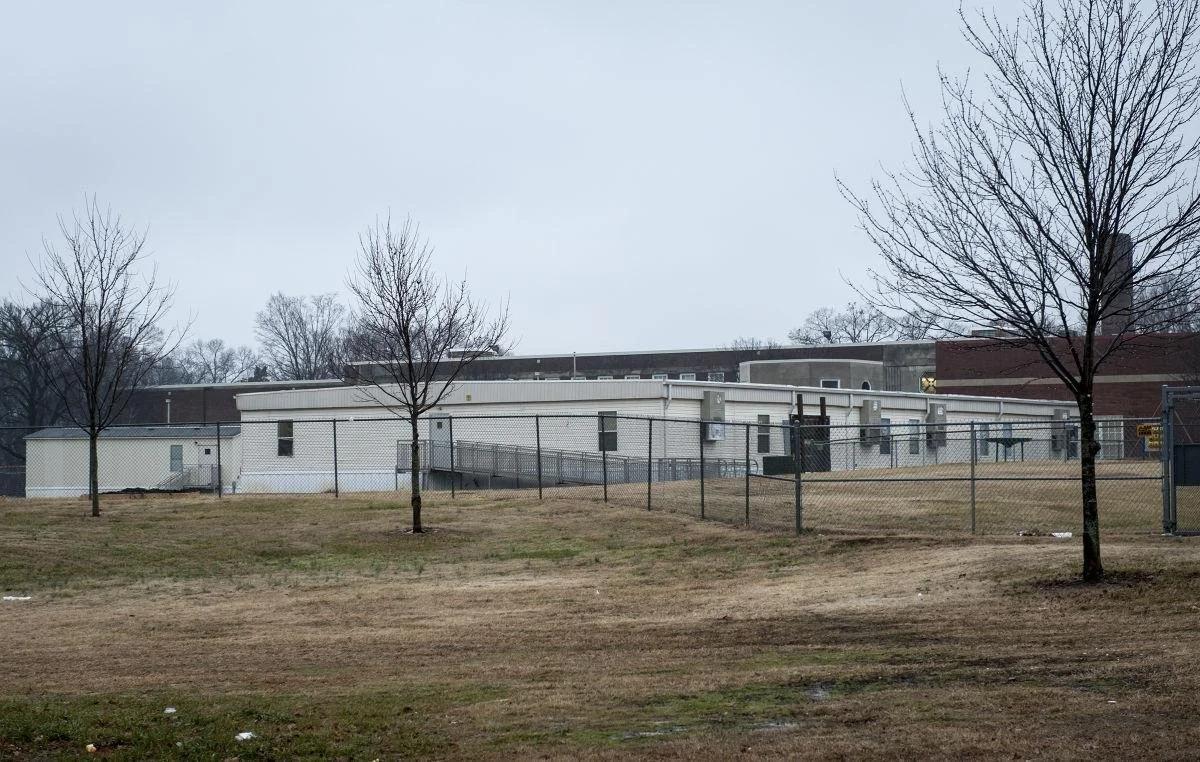
Schools sit on contaminated earth
Bertrand M. Gutierrez and Arika Herron/Winston-Salem Journal
“As students walk up to Hanes and Lowrance middle schools in northern Winston-Salem, a loud buzzing noise follows them to the front door of the building. It’s the sound of a very strong pump, part of a $665,000 project financed by a manufacturer across the street to clean up a large plume of underground toxic waste.
The plume contains at least one chemical known to cause cancer and another linked to it. About 30 feet to 90 feet below the surface, the plume stretches roughly a third of a mile. It stretches from the source, a decades-old chemical dump, and across the street under the joint school building and its grounds. State environment regulators have flagged the whole underground plume as one of the worst hazardous waste sites in North Carolina. Of the 531 hazardous waste sites on a priority list kept by the N.C. Department of Environment and Natural Resources, it is ranked 88, in the top 20 percent.”
-
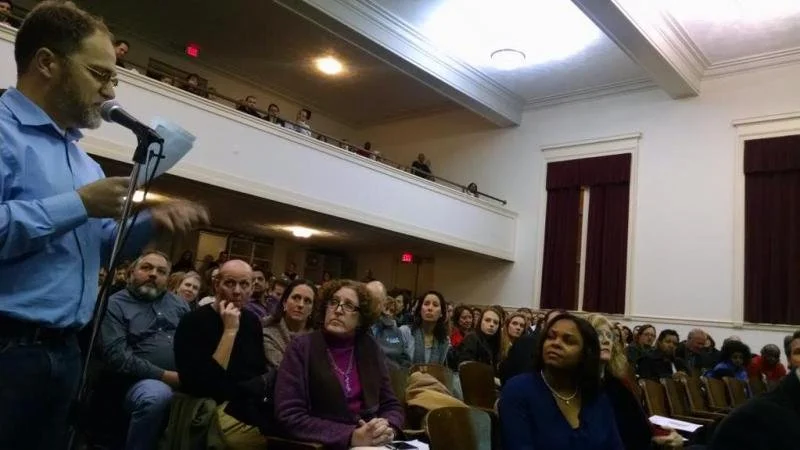
Parents Demand Hanes/Lowrance Schools Be Shut Down At Packed Meeting
Emily McCord/WFDD
“Vishal Khanna was among dozens of people that addressed the board. He has a child that goes to the school.
"My first son has been exposed to toxic waste because of these people and because of the decisions of this city and this is unforgivable," says Khanna.
…
Beverly Emory, Winston-Salem/Forsyth County schools superintendent, apologized at the meeting for the lack of communication with parents.
"We know there's blunders in the past. All I can do is acknowledge them and say going forward we want to improve upon the transparency and the ability for students, staff and parents to have the results of these tests," says Emory.
…
Lowrance is a school for EC or "exceptional children" designations, or those with special needs. Some parents complained that some of their children have conditions that make them more vulnerable to toxins.
-
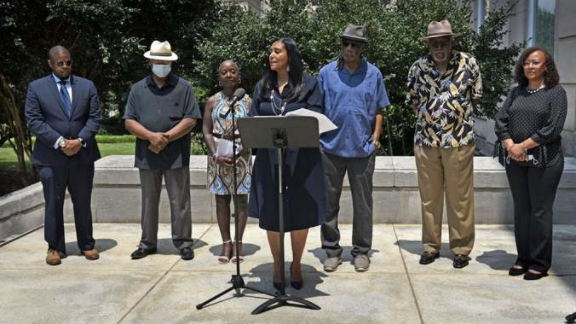
School district will keep old Hanes-Lowrance site
“At that press conference, [Northeast ward City Councilwoman Barbara Burke], was flanked by several prominent members of the Black community including activist Larry Little, Mayor pro-tem D.D. Adams and Al Jabbar, the president of the NAACP, as she pitched the idea of turning the school site into a “one-stop transformational, transitional community center” that would include job training, transitional housing and retail, using some of the $55 million the city was awarded from the American Rescue Plan.
The school system has its own ideas for the property, including some that would serve the needs of the community, such as a teaching kitchen, a medical clinic, and a space for community meetings.
Beyond the community component, the Hanes-Lowrance site could help solve some of the school district’s space needs. In his presentation to the Buildings and Grounds committee of the school board, Walker said the school district will need to find 17 classrooms to house the Kingswood School by July 2022. The Kingswood School is an alternative school for K-12 students.
The old Hanes-Lowrance site could also be used as office space for technology, nutrition, exceptional children support staff and other departments as well as be a spot that supports homeless students and offers psychological services.”
-
Second look: Hanes Lowrance school closure might have been rash
Jordan Green/Triad City Beat
“Hanes Lowrance was by no means unique in Winston-Salem in being exposed to legacy industrial contamination. Carter G. Woodson School, a charter school founded by a former member of the Black Panther Party that predominantly serves low-income black and Latino students, discovered concentrations of PCE and another chemical, trichloroethylene, known as TCE, that exceeded screening levels set by the NC Department of Environment and Natural Resources, or DENR, in May 2013. The school is located in southeast Winston-Salem, an area with a similar socioeconomic demographic and industrial background as the neighborhood surrounding Hanes Lowrance.
Carter G. Woodson School hired Mid-Atlantic Associates to conduct indoor air quality tests. After similar problems came to light at Hanes Lowrance Middle School, Winston-Salem/Forsyth County Schools hired the same firm to conduct indoor air quality tests there. In November 2013, administration at Carter G. Woodson School sent out letters to parents informing them of the potential environmental hazards and the school’s efforts to remediate the problem. There was no panic, public outcry or threats by parents to pull their children out of school. In January 2014, results came back showing no exceedances of indoor air levels of PCE and TCE.
…
Acknowledging the sensitivity of race, [school board member Elisabeth] Motsinger said the dynamics of having a magnet program that attracts students from more affluent families on the same campus with a predominantly black neighborhood school shaped the public discourse.
“It is areas where people of color live and where poor people live that are the areas of contamination,” she said. “So you go into the quote ‘pure’ suburbs, and you won’t find these problems. I think on a deeply felt level that’s what the parents of the [highly academically gifted] program at Hanes Lowrance discovered. It was the first time they had come face to face with the understanding that an environmental issue was going to affect their children. It was terrifying for them — understandably. Their reaction is: Let’s get away from here. And there’s nowhere to run.”
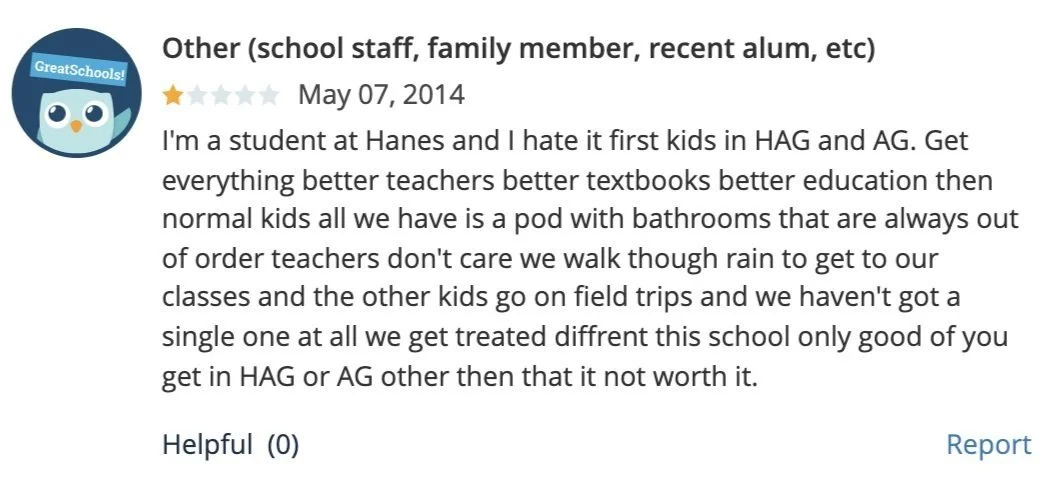
Hanes Magnet School has a long history of segregating traditional students from Academically Gifted (AG) and Highly Academically Gifted (HAG) students. Note: Traditional students are typically black and Hispanic kids from the surrounding low-income neighborhood. AG and HAG students typically come from middle or upper-class families. Source: GreatSchools.org
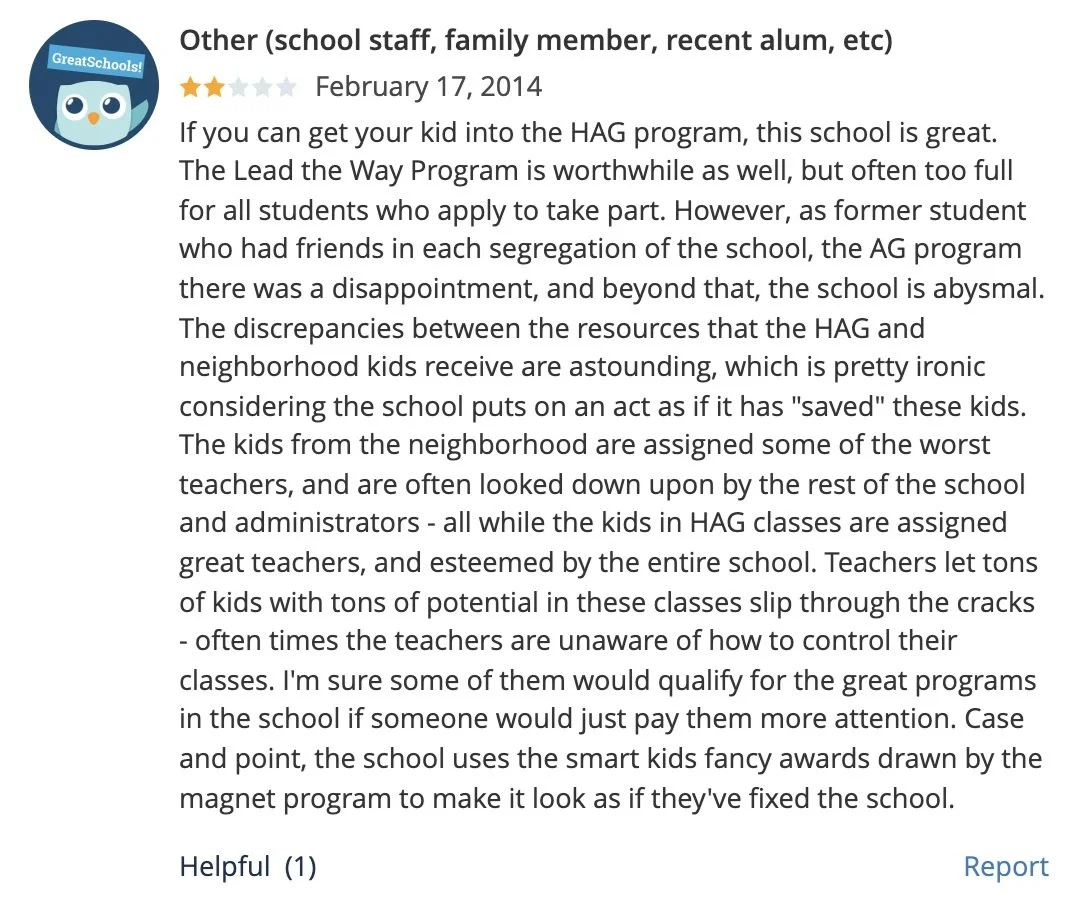
Hanes Magnet School has a long history of segregating traditional students from Academically Gifted (AG) and Highly Academically Gifted (HAG) students. Note: Traditional students are typically black and Hispanic kids from the surrounding low-income neighborhood. AG and HAG students typically come from middle or upper-class families. Source: GreatSchools.org
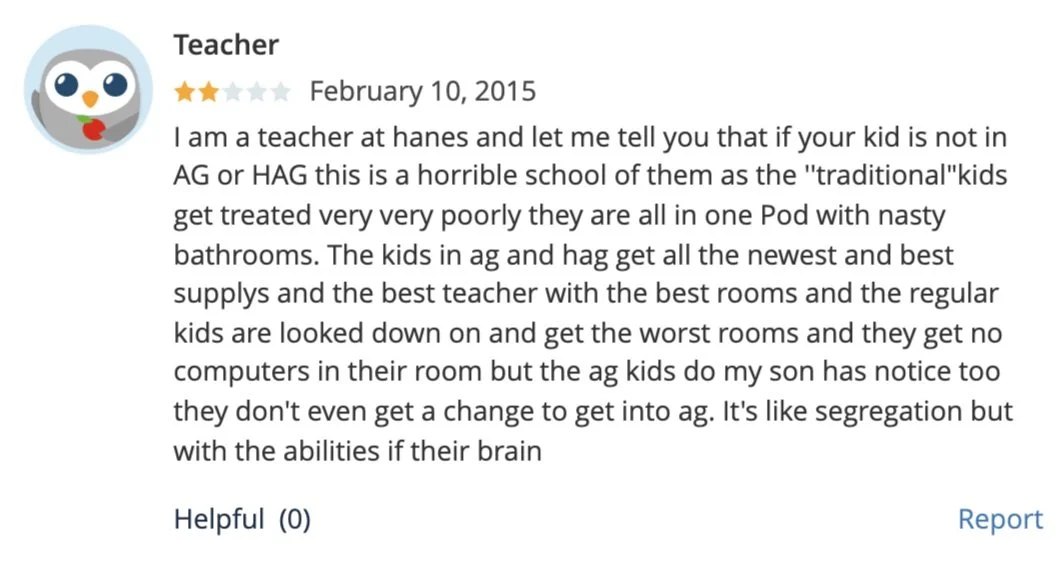
Hanes Magnet School has a long history of segregating traditional students from Academically Gifted (AG) and Highly Academically Gifted (HAG) students. Note: Traditional students are typically black and Hispanic kids from the surrounding low-income neighborhood. AG and HAG students typically come from middle or upper-class families. Source: GreatSchools.org
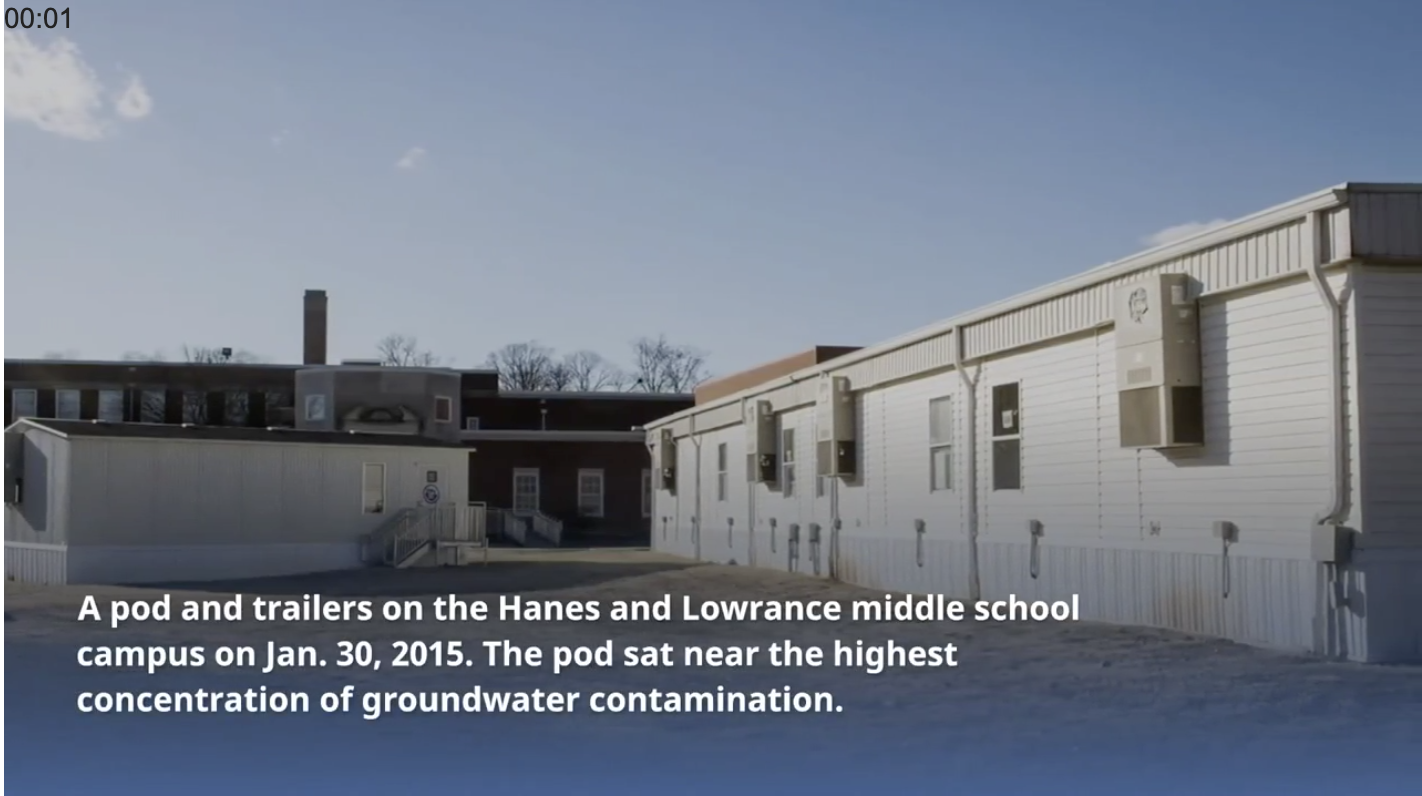
Source: Winston-Salem Journal
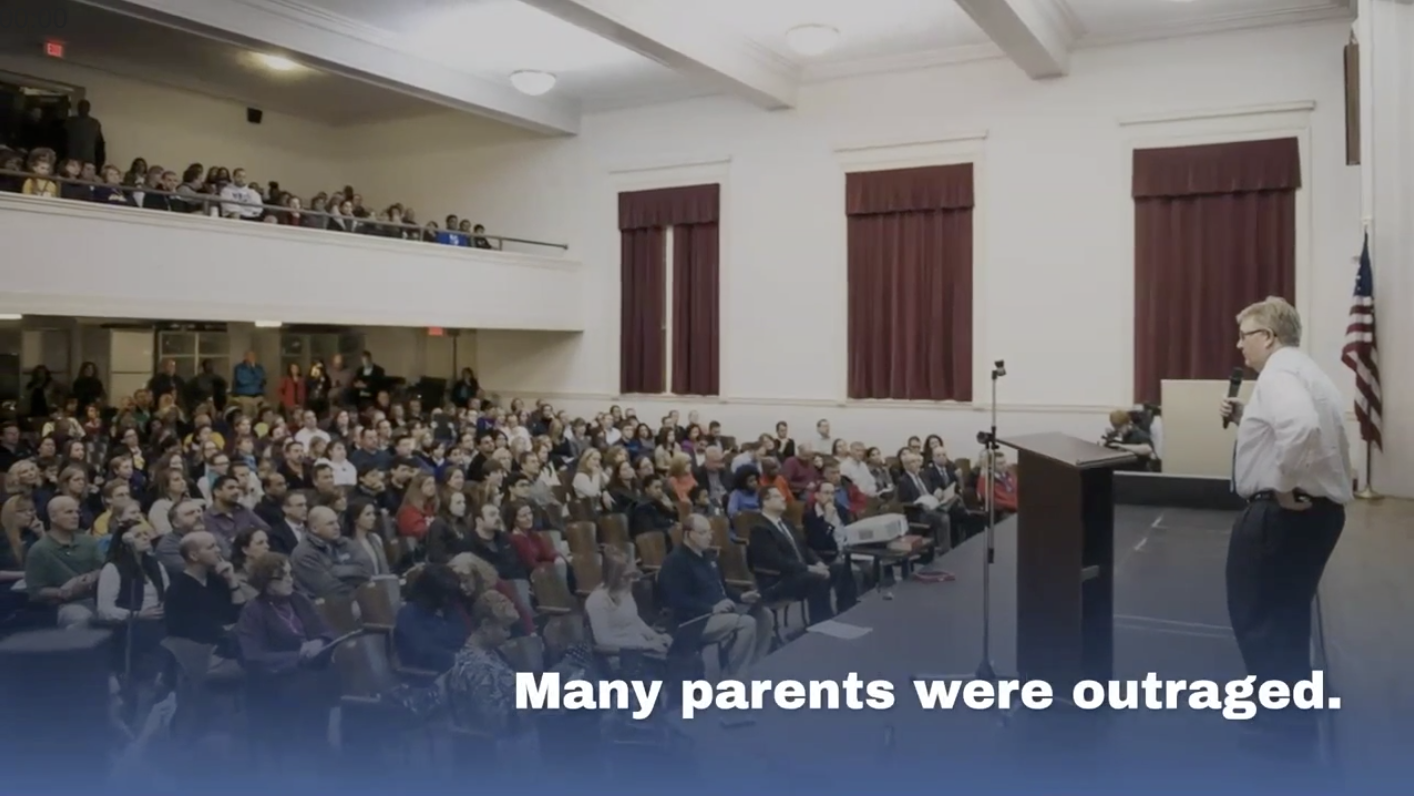
According to Schooldigger.com, about 44% of students at Hanes Magnet School were black or Hispanic in 2015. Lowrance Middle School's student population was 68% black or Hispanic at the time (https://www.schooldigger.com/go/NC/schools/0150000608/school.aspx ) (https://www.schooldigger.com/go/NC/schools/0150000619/school.aspx/) Picture Source: Winston-Salem Journal
May I Have…?
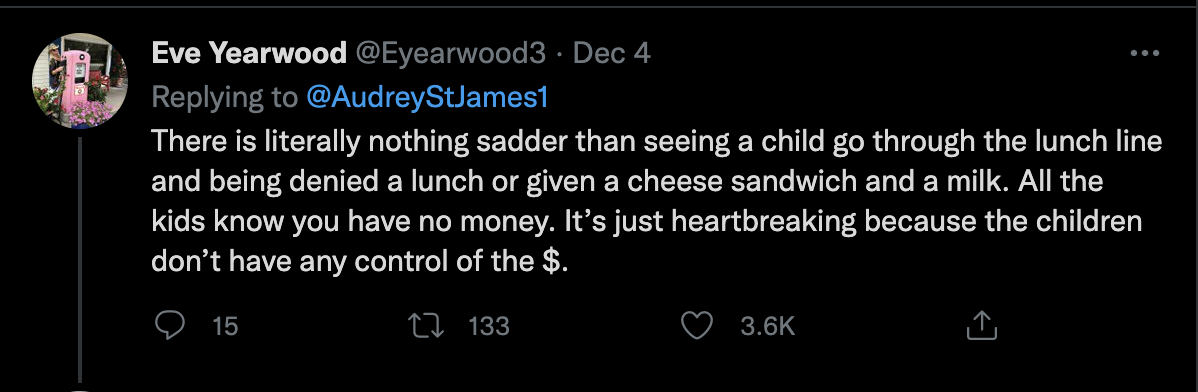
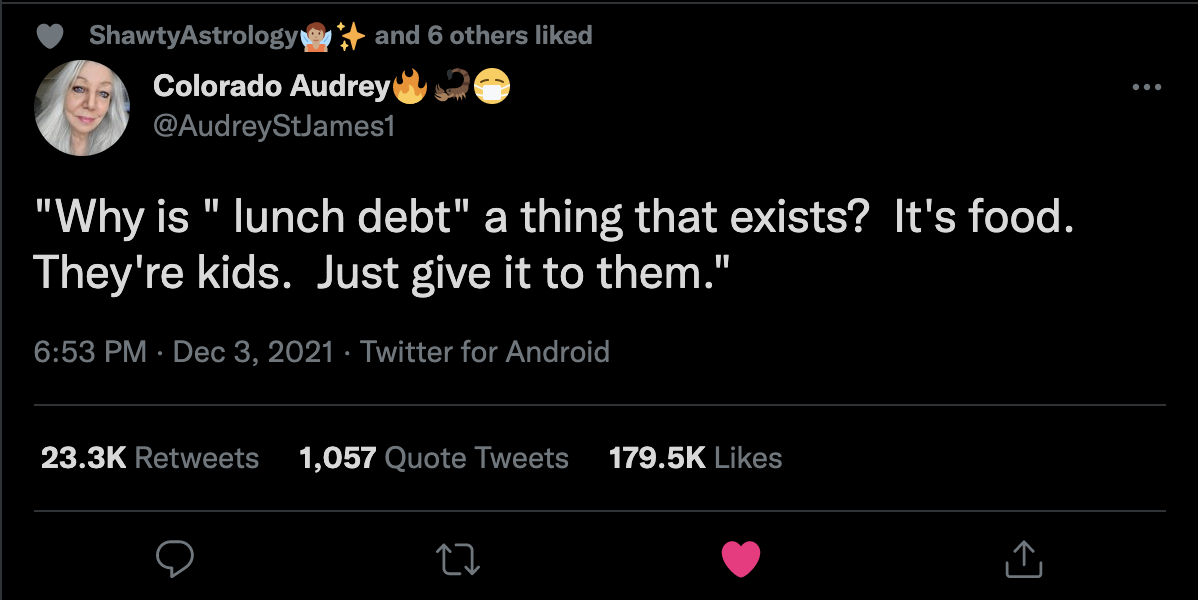
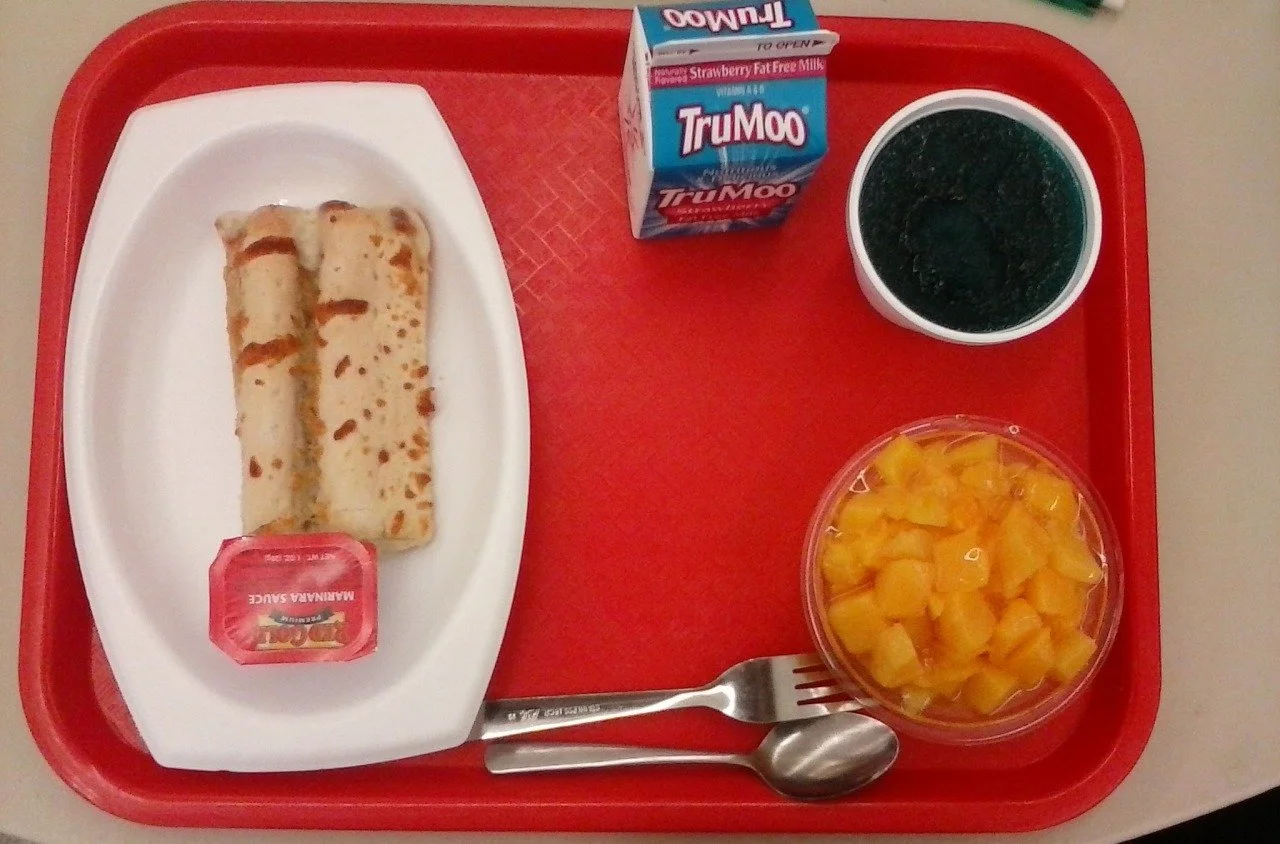
What’s on the Menu in Our Schools

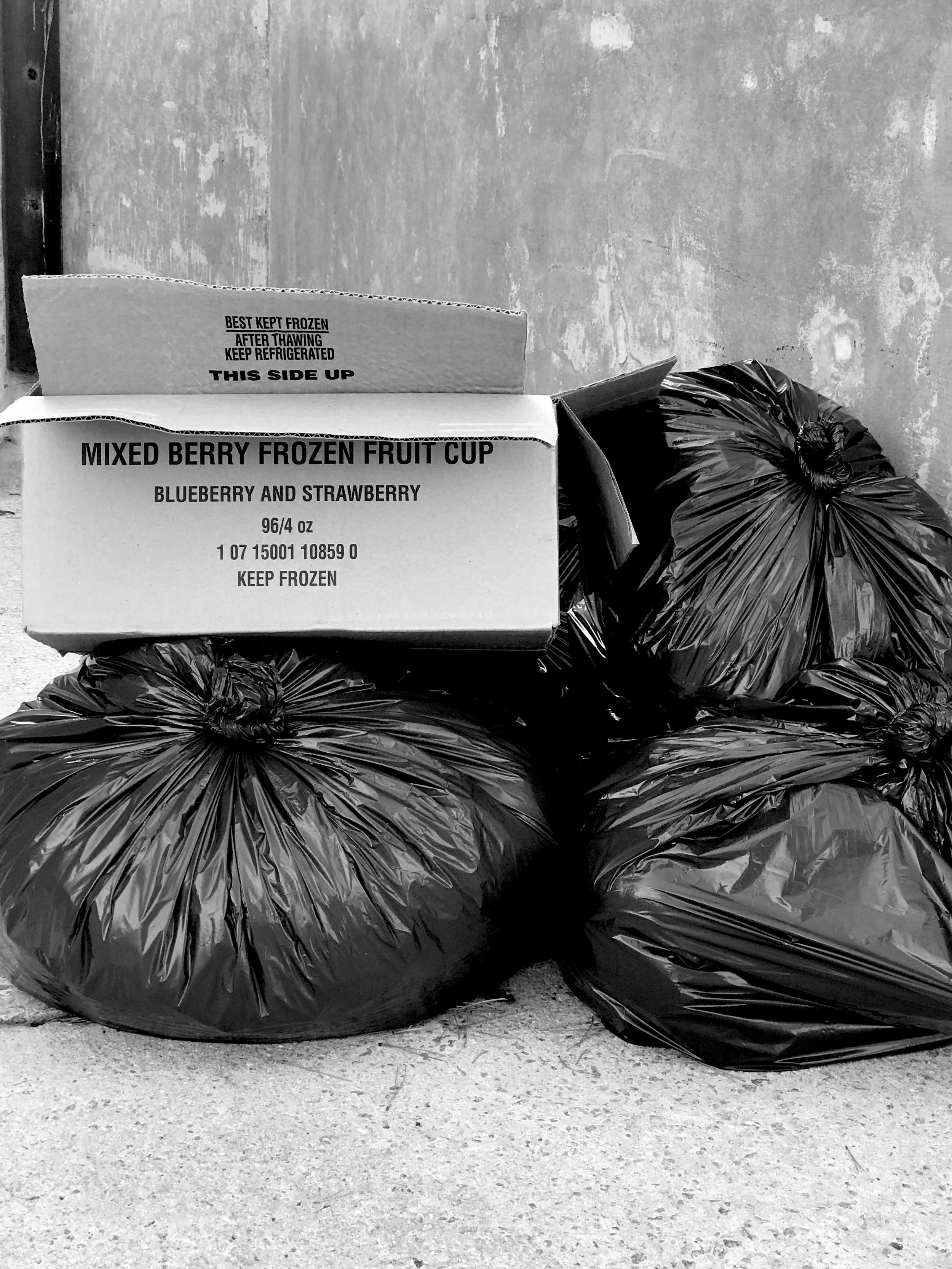
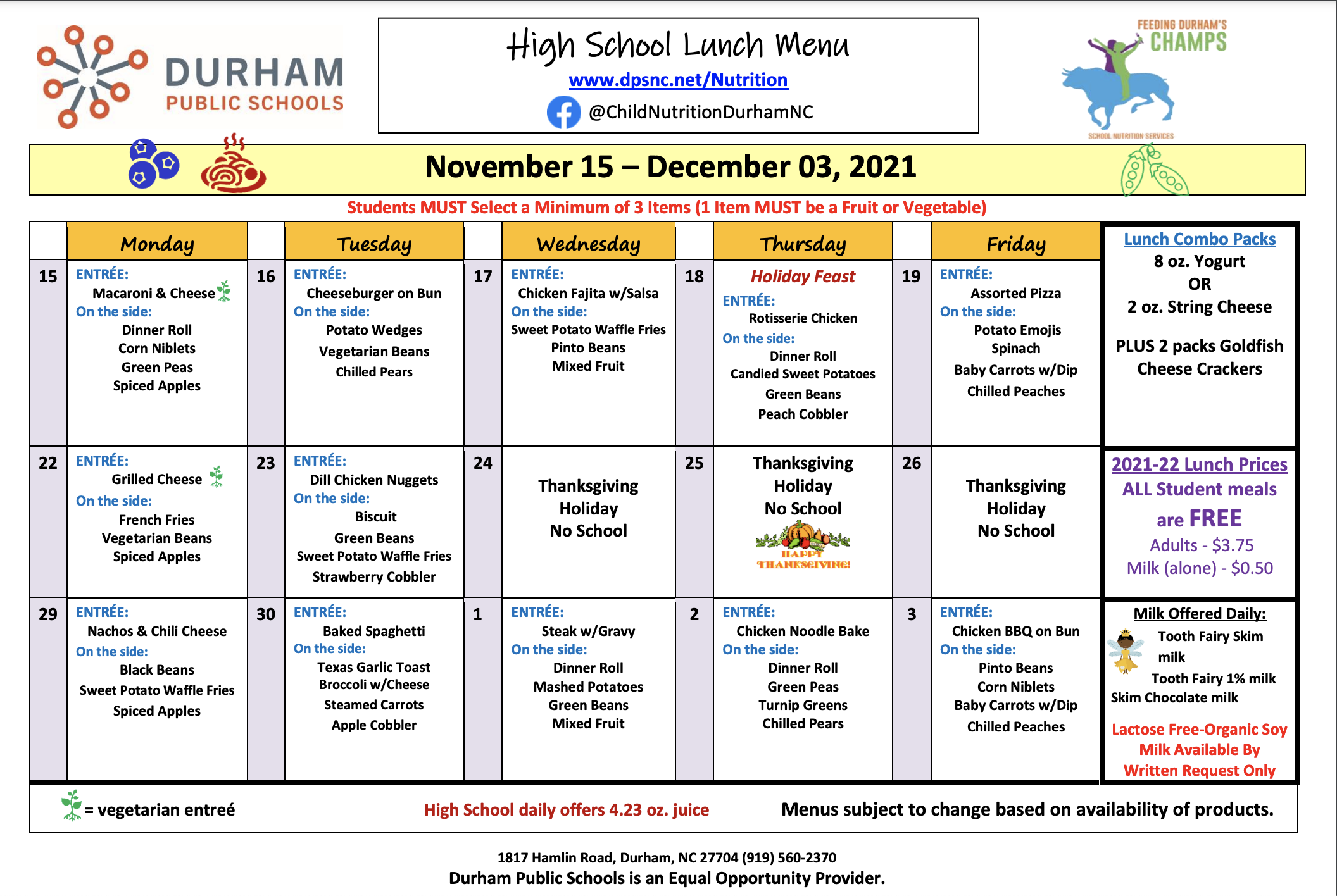
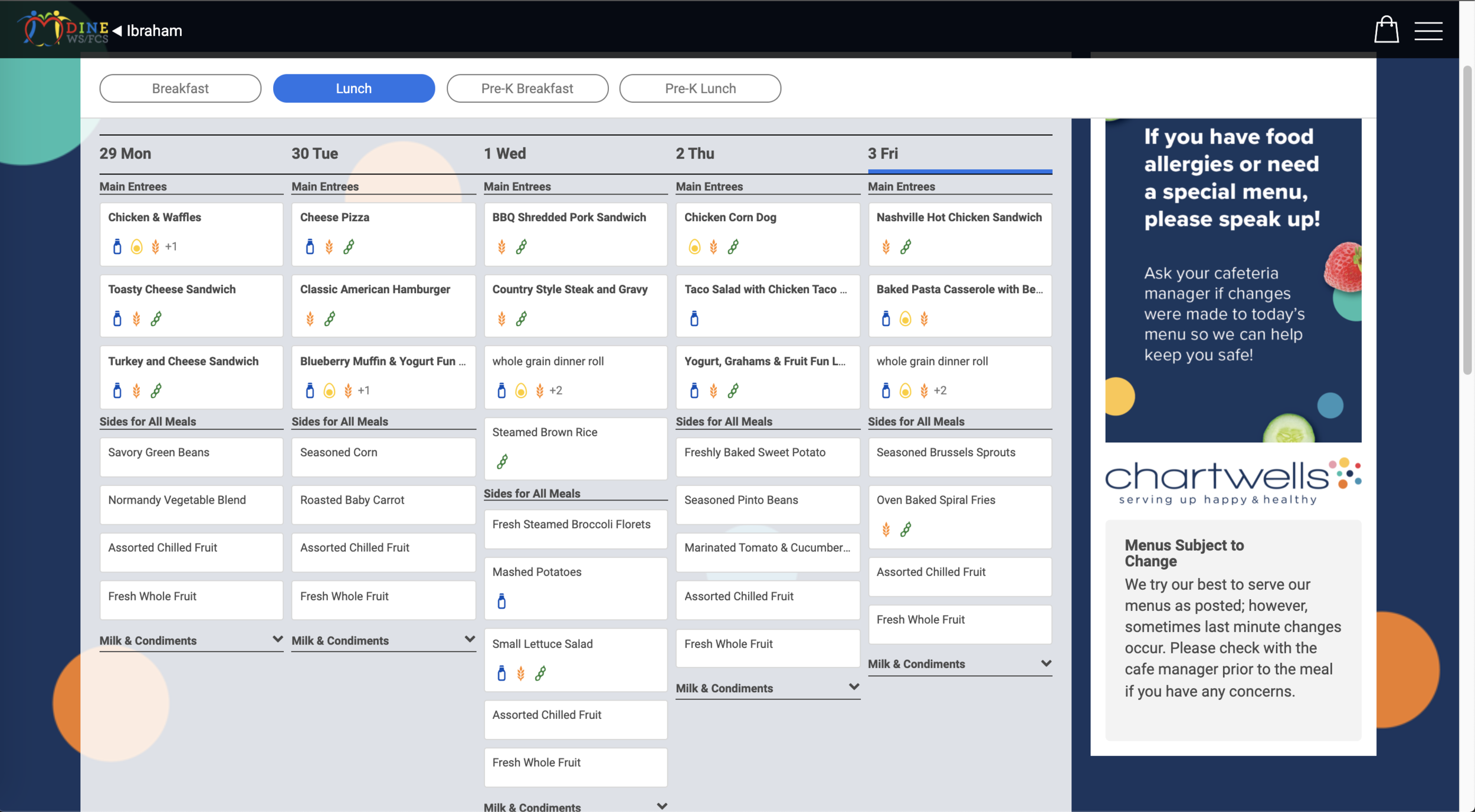
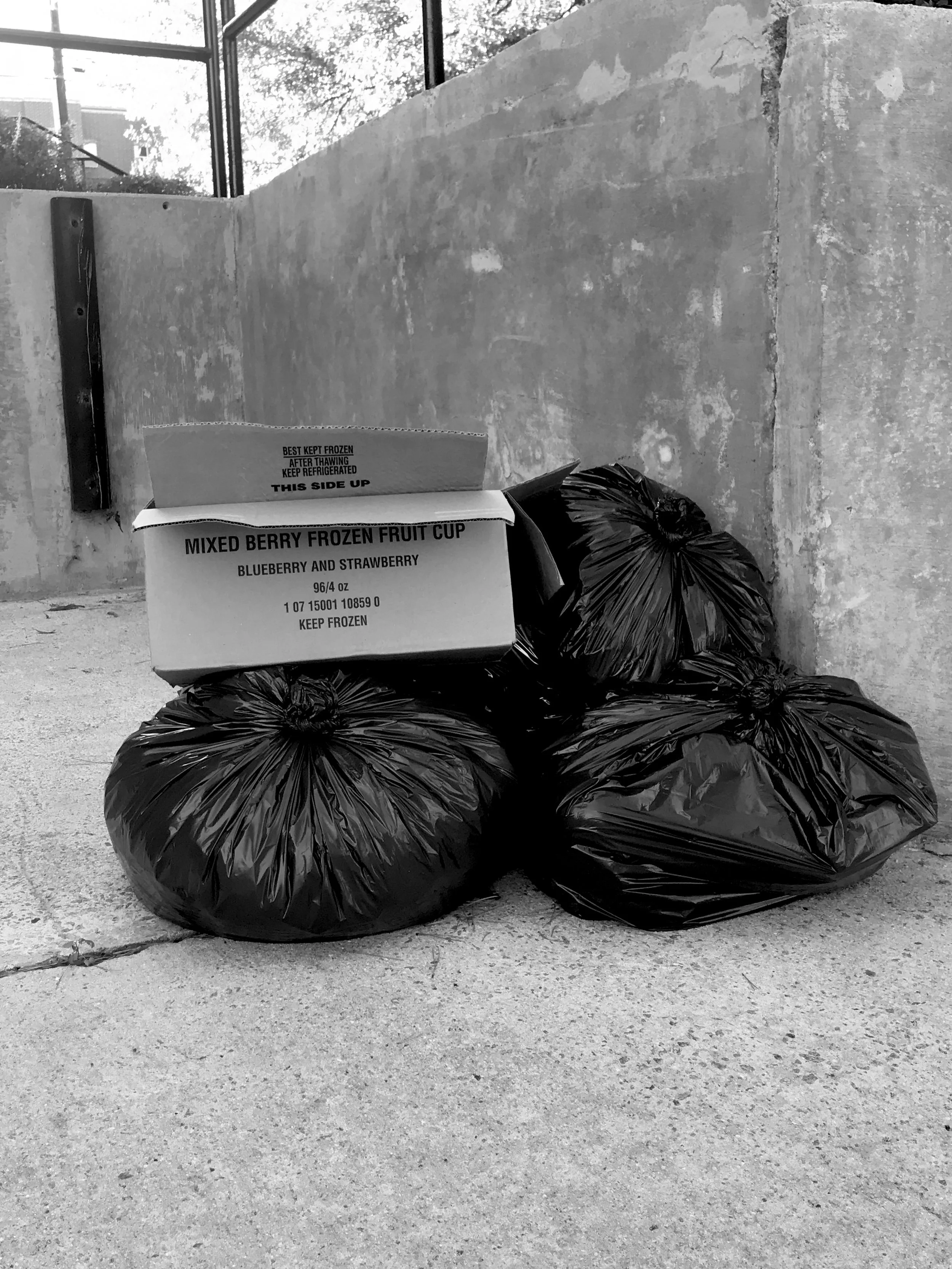
Second Home
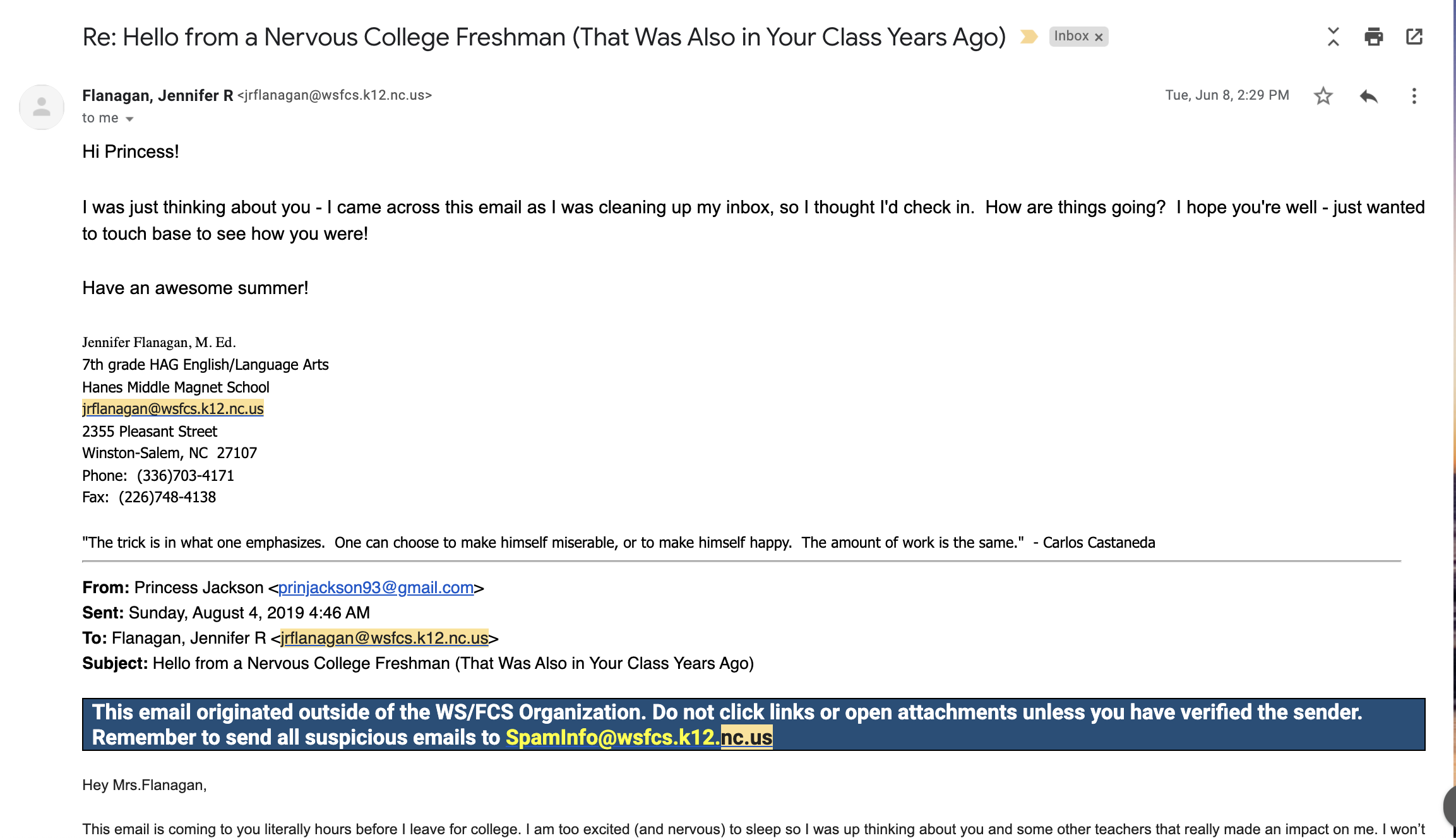
Teachers that Shaped Me Into Who I Am
-
Mrs. Flanagan (7th Grade English/Language Arts)
-
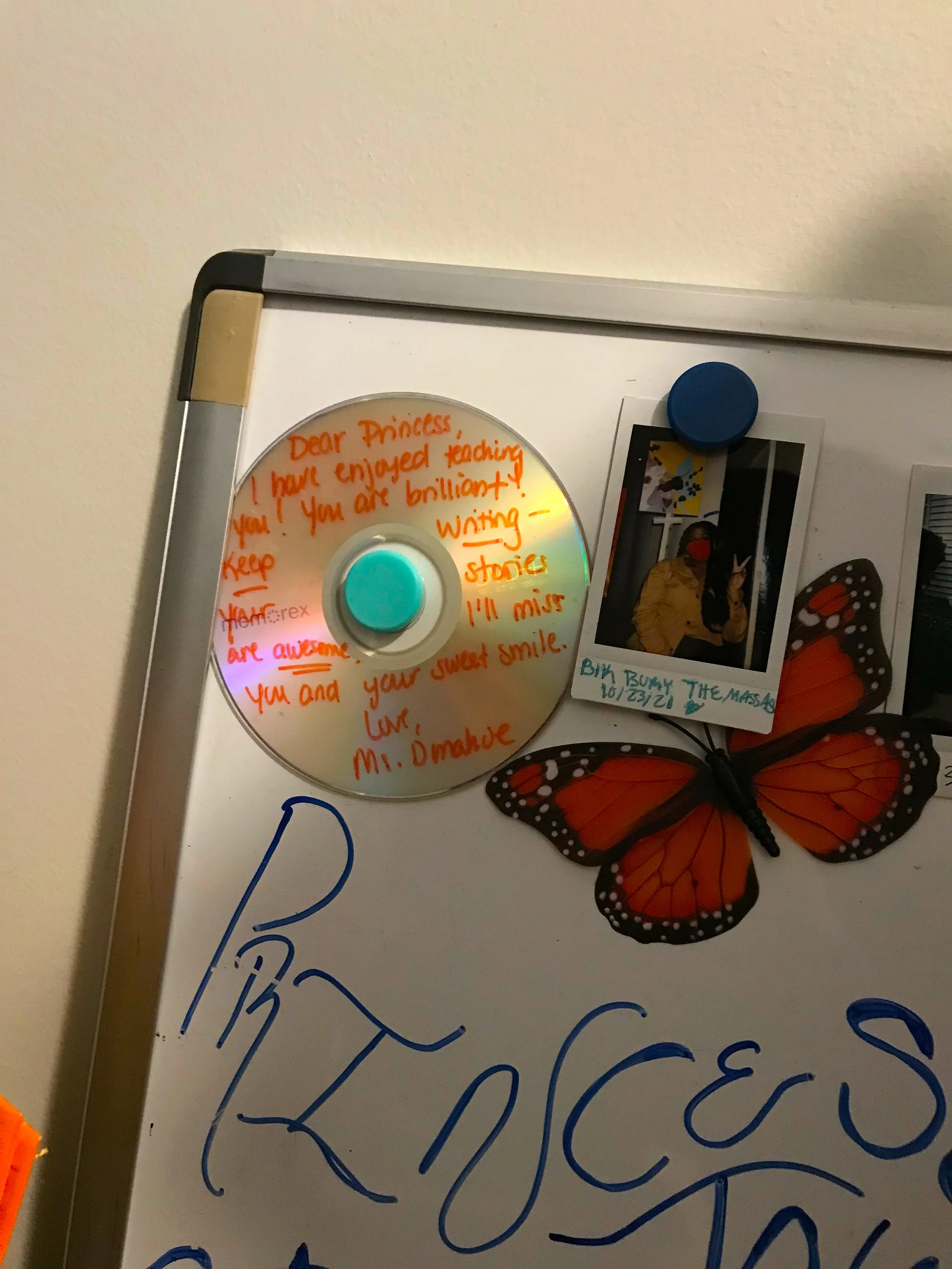
Ms. Donahue (4th Grade Student Teacher)

Fill in the Blank
Describe your school environment. Here are some questions to guide you:
-What was the condition of the building?
-What resources (technology, counseling, social workers, health care etc.) did you have access to? What was the quality of those resources?
-Did you eat food from the cafeteria or did you pack a lunch? How would you rate the food? How did it make you feel?
-What students, teachers, or faculty members had a profound impact on your growth? (This can be positive or negative)